| OREGON FIRE CHIEFS ASSOCIATION |

CONFERENCE program
2026 OFCA Spring Conference Program
Speaker: Matt Caward

The RGB Mindset and the 8 Rules: A Fire Officer’s Blueprint for Building and Sustaining a Culture of Excellence
Culture determines everything: morale, retention, communication, safety, performance, and how well a department can execute its mission. Yet firehouse culture rarely changes by accident. It changes through leadership, clarity, and consistent daily behaviors.
In this engaging and practical session, Division Chief Matthew S. Caward presents The 8 Rules of Building a Culture of Excellence, a proven, field-tested leadership model used by company officers and chief officers across the country. These eight rules provide a blueprint for strengthening communication, elevating teamwork, reducing conflict, and cultivating high-performance crews.
Using real-world fireground stories, station-level leadership challenges, and the RGB Mindset framework, Chief Caward shows how officers at every level of the organization can influence culture through the RGB Mindset and a proven methodology that guides preparation, discipline, gratitude, trust, accountability, and intentional leadership habits. Attendees will leave with clear, practical tools they can use on their very next shift to boost morale, build trust, and foster a fire department culture where people are driven to excel and enjoy their work.
Participants will learn how to:
- Apply The 8 Rules to create predictable, high-trust firehouse culture
- Strengthen communication, clarity, and collaboration within crews
- Build daily leadership habits that improve morale and accountability
- Understand and apply the RGB Mindset to reduce conflict and improve coaching
- Build a performance-driven culture that supports recruitment, retention, and safety
- Utilize the Continuous Loop of Greatness (Protect, Prepare, Perform, Persevere) to drive growth and resilience
About
Matt Caward has extensive experience building successful organizational cultures in the Fire Service, Professional Sports, full-time ministry, and business. Matt is a certified smoke diver, a published author, and a 24-year veteran of the Fire Service, having served 20 years with the Bernalillo County Fire Department in Albuquerque, New Mexico, and as the Division Chief of Operations and Training at the Grand Island Fire Department in Nebraska.
Matt is the founder and former owner of the two-time world champion professional arena football franchise, the Duke City Gladiators. Matt is a successful business owner and an ordained pastor with more than 20 years of experience. He holds multiple CPC credentials, including Fire Officer (FO), Chief Fire Officer (CFO), and Chief Training Officer (CTO) from the Center of Public Safety Excellence (CPSE), where he serves as a peer reviewer and mentor. Matt is a graduate of the NFA’s Managing Officer Program, a current EFO student, and a graduate of the 22nd Fire Service Chief Executive Officer Program at Texas A&M and TEEX. Matt served on the IAFC’s Company Officers Section Board, is an active member of the International Society of Fire Service Instructors and the Institution of Fire Engineers. He is a doctoral student in Organizational Leadership with both an MBA and a master’s degree in theology. He has bachelor’s degrees in fire and emergency services administration and Biblical theology, is an instructor at the National Fire Academy, is the Founder and CEO of RGB Firehouse Leadership, and is a U.S. Army veteran.
Speaker: McKenzie Nix

Sexual Abuse Prevention: what you need to know
Sexual abuse prevention is a challenging but critical topic for fire districts. This session provides an overview of the scope of the problem, how grooming behaviors develop, and why recognizing early warning signs is essential to prevention. Participants will learn how professional boundaries reduce risk and how fire districts can foster a culture where grooming and boundary violations are not tolerated, concluding with an overview of reporting requirements.
About
McKenzie Nix has been with the Special Districts Association of Oregon for nearly six years, serving as the Sexual Abuse Prevention Consultant. During her time with SDAO, she has conducted over 100 sexual abuse prevention training courses.
A former Oregon State University soccer player and Air Force veteran, McKenzie holds a bachelor’s degree OSU and a master’s degree from Georgetown University. Before her work with SDAO, she played a key role in student-athlete education at Wright State University, where she managed the Student-Athlete Advisory Committee and led initiatives focused on sexual assault prevention and power-based violence.
Outside of her professional work, McKenzie is a passionate advocate for fitness and wellness. She enjoys staying active, reading, and spending time with her husband and children.
Speaker: Jeremy Craft

Western Fire Chiefs Association Update: Programs, Partnerships, and Priorities
Join Jeremy Craft, President of the Western Fire Chiefs Association (WFCA), for an overview of the Association’s current initiatives, partnerships, and strategic priorities supporting fire service leaders across the region. This session will highlight WFCA programs, advocacy efforts, and ways Oregon chiefs can engage with and benefit from regional collaboration through the Association.
About
Jeremy Craft has been in the fire service for the past twenty-nine years. Jeremy began his career as a volunteer for the local ski patrol in Montana. After high school he moved to Utah to pursue a career as a paramedic. It was as a part time employee at South Davis Fire District that he received his initial firefighter training.
Just after graduation from Paramedic school in 1996, Jeremy was hired by Provo Fire and Rescue. Throughout Jeremy’s career he worked as a medic engineer, Captain, and Battalion Chief.
He was fortunate to be able to fly with Life Flight as a paramedic for five years. In 2007 Jeremy was accepted to Utah Valley University and began pursuing his educational goals. Jeremy graduated with honors in April 2009 with a Bachelor of Science in public emergency services management. He continued his education at Upper Iowa University. In 2013 he graduated with a Masters of Public Administration. He completed the Executive officer program at the national fire academy in 2014
Jeremy took the fire chief job with Lehi City in December of 2014, and still holds that position today. He is currently the President of the Western Fire Chiefs association.
Speaker: Sal Scarpa

The Generational Shift: Strategies for Mentoring and Leading Today’s Firefighters
HANDOUT
The Generational Shift: Strategies for Mentoring and Leading Today’s Firefighters, focuses on leading the next generation of firefighters and adapting leadership approaches to meet evolving workforce expectations. The fire service is changing rapidly, and successful leaders must embrace strategies that engage, mentor, and inspire firefighters across multiple generations.
The session explores three key areas:
- Leading the next generation of firefighters will require different approaches than in the past. We must reevaluate our leadership styles and identify effective strategies to develop and support them.
- A one-size-fits-all leadership model is unlikely to succeed. While we do not need to cater to the whims of every new firefighter, leaders must learn to pivot and mentor effectively based on generational strengths and needs.
- Key generational characteristics will be explored, as well as actionable leadership strategies to engage, inspire, and retain talent in today’s diverse fire service workforce.
Learning Objectives
- Understand why leading the next generation of firefighters requires a shift in leadership approaches and strategies.
- Recognize that a one-size-fits-all leadership style is ineffective and explore flexible methods to mentor and inspire across generations.
- Identify the defining characteristics and expectations of different generations within the fire service workforce.
- Apply targeted leadership strategies to improve engagement, mentorship, and retention among multi-generational teams.
About
A thirty-five year fire service veteran, Chief Scarpa currently serves as the Fire-EMS Chief for Columbus, Georgia’s second largest city. He has written numerous articles for the fire service and presented at many regional, national, and international conferences on contemporary issues in the fire service. Sal has an associate’s degree in fire science, a bachelor’s degree in public administration, and a master’s degree in leadership studies. He is a graduate of the National Fire Academy’s Executive Fire Officer (EFO) program, a credentialed Chief Fire Officer (CFO) with the Center for Public Safety Excellence, and a graduate of the International Association of Fire Chiefs’ Fire Service Executive Development Institute (FSEDI). Sal serves as a Commissioner for the Center for Fire Accreditation International (CFAI) representing metro fire agencies and is a member of the Board of Directors for the CPSE Center for Innovation. He serves as a committee lead for the World Fire Congress Community of Practice on Climate Change representing metro fire agencies. Sal also serves on numerous boards and committees representing the fire service locally, regionally, and nationally.
Speaker: Jeff Pricher

UAS in the Fire Service: Practical Applications and Emerging Opportunities in Oregon
Uncrewed Aircraft Systems (UAS) are rapidly becoming essential tools for the fire service, from structure fires and search and rescue to complex wildland incidents. This session will provide a grounded overview of how Oregon fire agencies can safely and effectively integrate UAS into operations, with a focus on what is working locally, regionally, nationally, and internationally.
We will walk through the key Oregon Revised Statutes that govern public safety UAS operations, recent bills and rulemaking where the fire service has provided input, and how the Oregon Department of Aviation and FAA registration requirements shape agency responsibilities. Attendees will also hear about current Oregon UAS projects, including SPIRE-funded equipment, Regional Disaster Preparedness Organization (RDPO) innovations, and how statewide grant programs are supporting situational awareness and incident response.
The presentation will highlight resources and professional networks such as DRONERESPONDERS, the Fire Service Robotics Work Group, the NWCG Unmanned Aircraft Subcommittee, and National Fire Academy UAS Train-the-Trainer courses, and how they can support program development and training pathways. We will close with practical considerations for UAS use on wildfires, lessons from current deployments, and a realistic look at the future of UAS in Oregon’s fire service, aimed at helping agencies of all sizes decide if and how UAS might fit into their mission.
About
Jeff Pricher is the Fire Chief of the Scappoose Fire District in Oregon, where he focuses on supporting his crews and community through fire, EMS, wildland, and special operations services. He has more than 20 years of experience in specialized rescue and response, including swiftwater and rope rescue, marine firefighting, REMS, and Uncrewed Aircraft Systems (UAS), and was a key partner in helping create the UAS Instructor Train-the-Trainer courses at the National Fire Academy.
Jeff is involved in several groups working to improve how drones and robotics are used in public safety. He serves as Vice President of the Cascade Chapter of AUVSI, represents the International Association of Fire Chiefs on the NWCG Unmanned Aircraft Subcommittee, serves on the advisory board for DRONERESPONDERS, and is Vice Chair of the Fire Service Robotics Workgroup. He also serves on the Oregon Department of Aviation board by gubernatorial appointment and participates on the steering committee for the Law Enforcement Drone Association.
In addition to his work in Scappoose, Jeff volunteers with the Hood River Crag Rats mountain rescue team. He previously served 24 years as a Safety Officer on a federal Disaster Medical Assistance Team (DMAT) with the U.S. Department of Health and Human Services and is a current member and Safety Officer of one of the federal Northwest Complex Incident Management Teams (CIMT). He is also a co-author of Wildland Firefighter: Principles and Practice with Jones and Bartlett and the chair of the Fire & EMS workgroup that brings together about 35 regional fire agencies.
Speaker: Chris Heppel

What happened to the Fire Chiefs Toolbox? Where is it today?
The Oregon Fire Chiefs Association is launching a multi-phase Chief Officer Development Program designed to prepare current and emerging leaders for the complex challenges facing today’s fire service. Built around leadership, executive management, and resiliency, the program combines contemporary issues, strategic leadership development, governance, finance, human resources, wellness, and mentorship into a comprehensive professional growth journey. Participants will engage in conference-based learning, executive projects, collaborative roundtables, and immersive development experiences hosted across Oregon. Designed as a statewide leadership system rather than a single course, the academy aims to build confident, capable, and resilient chief officers prepared to lead their organizations and communities into the future.
About
Christopher Heppel is a twice retired Deputy Fire Chief and U.S. Air Force Master Sergeant with more than 35 years of leadership experience in fire service, EMS, emergency management, and public sector operations. A graduate of the National Fire Academy’s Executive Fire Officer (EFO) Program, he specializes in leadership development, large-scale incident management, and complex special event planning. Chris is a National Fire Academy instructor, qualified Type II Planning Section Chief, and Incident Management Team member with experience working alongside cities, non-profits, public agencies, and statewide organizations. Post retirement he continues supporting the Oregon fire service by developing training, safety, and risk management programs that strengthen organizational readiness, resilience, and operational performance. He is also a past President of the Oregon Fire Chiefs Association.
Speaker: Sara Jahnke

The Importance of Medical Exams and Cancer Screenings. How to Build a Clinic.
Dr. Sara Jahnke discuss the importance of medical exams and cancer screenings in the fire service.
About
Dr. Sara Jahnke is a nationally recognized scientist and innovator dedicated to advancing the health, wellness, and performance of fire and emergency service personnel. As a senior scientist with the Center for Fire, Rescue & EMS Health Research, her work bridges rigorous science with real-world application, focusing on behavioral health, cardiovascular risk, and the long-term impacts of the job. She has authored over 100 peer-reviewed publications and received funding from the National Institutes of Health (NIH), FEMA, the American Heart Association, and the American Cancer Society. She serves as President of Science to the Station and ResponderStrong, leading national efforts to translate evidence into practical tools and programs that reach the front lines. Expanding this impact, she is the Chief Innovation Officer for 360 Responder Health Medical & Safety, where she drives the development of integrated, evidence-based solutions designed to optimize readiness, resilience, and career longevity across public safety. Across all roles, her work is defined by a commitment to ensuring that those who serve have access to the knowledge, care, and systems they need to thrive.
Speaker: Panel Discussion
What HB 3940 Means For You: Prepare for Taxing Changes this Fall
In the 2025 session, the legislature passed HB 3940 which provided long-needed reform of ORS 478.010(2)(c) and other key policy changes. Effective tax year 2026/2027, this ORS change significantly revises what forestland classified lands are included in RFPD taxing authority. Join a panel discussion to learn about the “what and why” context of the changes and the implementation and education processes. This discussion will help prepare you to educate your communities and answer questions about taxation changes of classified forestlands.
Panel members:
Branden Pursinger, Association of Counties
Brian Stewart, Oregon Fire Chiefs Association
Mariana Ruiz-Temple, Oregon State Fire Marshal
Rachael Reynolds, Oregon State Assessors and Tax Collectors Association
Scott Smith, Department of Revenue
TBD, Oregon Department of Forestry
Panel Facilitator:
Roger Johnson, Fire Chief, Deschutes Rural Fire District #2
Speakers: Josh Goldberg and Patrick Fale


Taking Care of Your People: Leadership, Culture, and the Truth About the Job
For too long, the fire service has operated under a dangerous assumption—that the struggles of this profession inevitably lead to damage, and that PTSD is simply the price of service.
In this candid conversation, Josh Goldberg, CEO of Boulder Crest Foundation, and Patrick Fale, Deputy Chief at Tualatin Valley Fire & Rescue, challenge that belief head-on.
Together, they will explore what it really means to take care of your people — not through slogans or check-the-box wellness programs, but through the culture you build, the standards you set, and the example you live every day as a leader.
Drawing on decades of research in Posttraumatic Growth and real-world leadership experience in the fire service, this discussion will dig into a fundamental question:
Are we preparing our people to be shaped by the job, or strengthened by it?
This isn’t about avoiding struggle — it’s about understanding it, leading through it, and creating environments where people don’t just survive the job, but grow because of it.
Expect an honest, practical conversation about leadership, responsibility, and how to build teams that are stronger, more connected, and better equipped for the realities of the work.
About Josh Goldberg and Patrick Fale
Josh Goldberg, CEO of Boulder Crest Foundation, and Patrick Fale, Deputy Chief of Strategic Services at Tualatin Valley Fire & Rescue, bring together two powerful perspectives on leadership and growth through struggle.
Josh is a nationally recognized leader in posttraumatic growth and the architect behind Boulder Crest’s groundbreaking programs helping veterans, first responders, and their families transform struggle into strength. His work is helping redefine how we understand and respond to trauma—moving beyond simply “getting through” hard things to growing because of them.
Patrick brings more than two decades of fire service leadership experience, having served in key operational and training roles throughout his career. At Tualatin Valley Fire & Rescue, he leads strategic initiatives that shape culture, develop leaders, and strengthen performance across the organization.
Together, they share practical, hard-earned insights on how individuals and teams can struggle well, lead under pressure, and come back stronger—not in spite of adversity, but because of it.
Speakers: David Gerboth and Kyle Amsberry


Improving Care in Oregon’s Capital Through a Fire-Based Ambulance Service
After two decades of ambulance service provided by a private contractor, the Salem Fire Department reassumed responsibility for EMS transport, marking one of the most significant system changes in our organization’s history. This presentation outlines the strategy, planning, and execution required to transition to a fire-based ambulance model in a high-demand environment in a compressed time frame.
We will discuss the opportunities created by reassuming service, including improved clinical integration, enhanced deployment flexibility, stronger accountability, and the ability to align EMS delivery with community expectations. The presentation will also address the challenges encountered, such as workforce recruitment, retention, training, startup logistics, unit hour utilization, fleet acquisition, maintaining service continuity during the transition and cultural change of the workforce.
Key topics include financial considerations, activity level analysis, system design, labor impacts, operational readiness, and early performance outcomes. Attendees will gain insight into lessons learned, implementation timelines, and strategies for building a sustainable, high-volume EMS transport system while improving service delivery and responder safety.
This session is designed for fire service leaders, EMS administrators, and policymakers considering system transition, reassumption of service, or modernization of an existing EMS delivery model.
About
David Gerboth is honored to serve as the 43rd Fire Chief for the city of Salem and supporting the over 340 dedicated members of the Salem Fire Department.
Chief Gerboth has over 30 years of experience in the fire service, beginning his career in 1992 with the Shasta College Fire Department. Shortly after, he was hired by CAL FIRE where he worked in both Northern and Southern California. In 1997, he was hired by the Modesto Fire Department, where he worked until he was hired by the San Diego Fire-Rescue Department (SDFD) in 2001. Chief Gerboth has held the ranks of firefighter, engineer, Captain, Battalion Chief, Deputy Fire Chief, Assistant Fire Chief and now Fire Chief.
Before coming to Salem, Chief Gerboth served as 2nd in command of the San Diego Fire-Rescue Department as the Assistant Fire Chief of Emergency Operations. He oversaw six divisions, including three divisions of Operations, Special Operations, Emergency Medical Services, and the Lifeguard Services Division, with a budget of approximately $400 million dollars and 1,200 personnel. He served as a Shift Commander providing Citywide Operations coverage, as a Battalion Chief throughout the city as well as the program manager for Urban Search and Rescue California Task Force 8 (CA-TF8), the SDFD Technical Rescue Team and San Diego Urban Area Incident Management Team
Chief Gerboth has been a team member of CA-TF8, the SDFD Hazardous Incident Response Team, and the Technical Rescue Team. In addition, Chief Gerboth has responded to incidents of national significance throughout the country as a National Incident Management Team and Urban Search and Rescue Task Force member.
Chief Gerboth has and continues to serve on several committees and working groups, including the National Wildland Coordinating Group National Incident Management Integration Committee, FIRESCOPE Operations Team, and the California Incident Command Certification System State Task Force / Pace V Committee.
Chief Gerboth is a member of the International Association of Fire Chiefs Fire Service Executive Development Institute, holds an Associate of Arts in Fire Technology, a Bachelor of Science in Management, and a Master of Science in Fire Service Executive Leadership/Public Administration.
David is married, has three children, and enjoys spending time with family and friends engaged in various outdoor activities.
Kyle Amsberry is a seasoned fire service leader with more than 28 years of progressive experience in public safety. He retired in 2026 as Deputy Fire Chief of EMS for the Salem Fire Department, where he provided executive oversight of fire and EMS operations, system administration, and strategic initiatives within a high-demand, all-hazards environment.
During his tenure, Kyle played a key role in architecting and implementing a comprehensive fire-based EMS system from the ground up, including governance, staffing, deployment models, and medical oversight. He led large-scale hiring initiatives, managed multi-million-dollar budgets, and directed operational strategies supporting more than 36,000 annual emergency responses. His experience includes emergency management, system deployment analysis, policy development, and command within the ICS/NIMS framework.
Throughout his career, Kyle served in the ranks of Firefighter/Paramedic, Apparatus Operator, Captain, Battalion Chief, and Deputy Chief of Training and EMS. This progression provided him with a well-rounded operational and executive perspective, grounded in field experience and strategic leadership.
Speaker: Mariana Ruiz-Temple
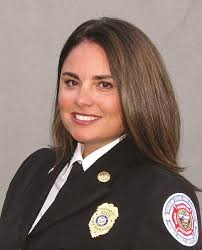
Oregon State Fire Marshal Presentation
About
Mariana Ruiz-Temple is a distinguished public safety leader with extensive expertise in fire service operations, emergency management, and strategic partnerships. She oversees statewide efforts to reduce the loss of life and property from fires, explosions, and hazardous materials incidents. Her work is defined by a decisive and collaborative leadership style that emphasizes building strong, results-oriented relationships with local, state, federal, and international partners.
With a career spanning more than four decades, Mariana has held progressively senior roles, demonstrating a commitment to enhancing public safety through innovation and strategic initiatives. She manages day-to-day operations, statewide mobilizations, and three incident management teams while serving as an advisor to the governor on implementing the Emergency Conflagration Act. As the Oregon state fire chief, Mariana ensures effective and efficient deployment of state resources during crises.
Beyond operational leadership, Mariana is deeply engaged in shaping fire service policy and advancing the field through active participation in many organizations. She serves on the National Association of State Fire Marshals executive board and is a chair of the International Association of Fire Chiefs' Emergency Management Committee. As a representative on the Oregon Emergency Response Council and the Western Fire Chiefs Association Wildfire Committee, Mariana contributes to strategies for wildfire management, mitigation, and recovery.
Mariana was selected to the prestigious Wildland Fire Mitigation and Management Commission, where she worked with a team to provide Congress with recommendations to improve federal wildfire policies, including prevention, suppression, and post-fire land rehabilitation.
Her expertise extends to managing multi-agency collaborations, advising legislators on fire-related policies, and representing Oregon in regional and national initiatives. Mariana’s leadership is informed by a robust education that includes the Oregon Executive Leadership Academy, the National Fire Academy’s Fire Service Interpersonal Dynamics program, and advanced training in hazardous materials and incident command systems.
Committed to excellence and public service, Mariana continues to drive progressive, outcome-focused initiatives to enhance public safety, support the fire service, and address emerging challenges in fire and emergency response.
Speaker: Eric Saylors

Quantifying the Negative: Measuring What Doesn’t Happen in Fire Service Risk Reduction
Fire departments traditionally measure success through visible outcomes: response times, incident counts, and suppression effectiveness. Yet some of the most important successes in the fire service are the incidents that never occur. Prevented fires, avoided injuries, and reduced community risk are often invisible in traditional metrics. This presentation explores how fire departments can begin quantifying the negative, measuring the value of prevention, mitigation, and proactive risk-reduction strategies.
Based on the research conducted for a master’s thesis, this presentation examines methods for identifying and measuring outcomes associated with Community Risk Reduction (CRR), prevention programs, training improvements, and operational policy changes. Using data analysis, comparative modeling, and case examples, the research demonstrates how agencies can estimate avoided incidents, reduced loss, and improved safety outcomes.
The session will discuss practical approaches for fire service leaders to translate prevention efforts into measurable impacts that can be communicated to policymakers, governing boards, and the public. By reframing success as the absence of tragedy, fire departments can better articulate the value of proactive strategies and support evidence-based decision-making.
Attendees will leave with concepts and tools for integrating prevention metrics into department performance systems and strengthening the narrative around the fire service’s most important mission: protecting communities from events that never happen.
About
Eric Saylors is a Fire Chief with 30 years of experience and a Doctorate in Leadership from USC. He currently serves the El Cerrito/Kensington Fire Department, having previously served with the Sacramento City Fire Department for 25 years. During his career, he has held the ranks of paramedic firefighter, engineer, captain, battalion chief, assistant chief, and fire chief. He has worked on an ambulance, fire engine, ladder truck, Type 1 hazmat team, and heavy rescue unit. He has experience in high-rise, large commercial, urban interface, basement, and balloon construction fires. Before promoting to the executive staff, he served as BC1, the battalion chief in downtown Sacramento.
In addition to his doctorate, he holds two associate degrees and a bachelor’s degree in finance, as well as a master’s degree in Security Studies from the Naval Postgraduate School (NPS).
Speaker: Eriks Gabliks

Happy 250th Birthday America - Issues Facing Today’s Fire Service Leaders
Ben Franklin got it all started and we have made amazing progress over the past 250 years. While much has been done, there is still work to do. Applicants for fire service vacancies are not knocking on your door anymore, fire apparatus has never cost so much, in many communities residents have lost touch with their fire department, social media is either a blessing or a curse, and more. Let’s discuss the issues facing today’s fire service leaders and let’s look at what is being done by your peers to address them.
About
Eriks Gabliks has served in various leadership positions over the past 25 years at the local, state, and federal levels. He has led career and volunteer organizations ranging in size from 75 to more than 400 members. Eriks holds a master’s degree in public policy and administration from Portland State University, is a graduate of the Executive Fire Officer Program at the National Fire Academy in Emmitsburg, Maryland, and the Executive Development Institute at the Federal Bureau of Investigation Academy in Quantico, Virginia. He is a life member of the Oregon Fire Chiefs Association, a past president of the North American Fire Training Directors, and is active in several national organizations. He is a first-generation Latvian and speaks, reads, and writes the language.